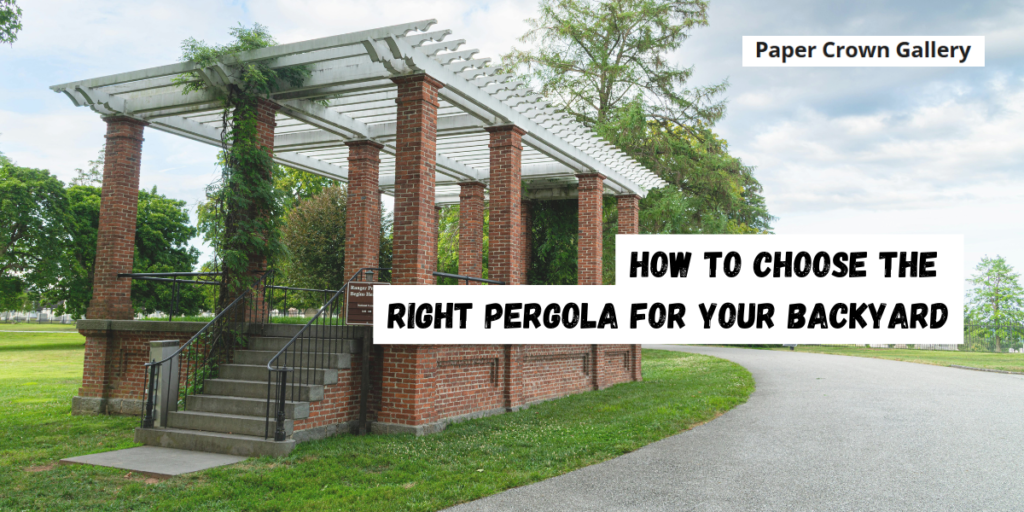
Always choose the right pergola by measuring your space, your home’s style, picking materials that fit your maintenance level, and how you’ll use it. Don’t worry, though, the process becomes much simpler once we break it down into steps.
But if you are too busy for that, you can work with experienced builders like Paper Crown Gallery. They will help you navigate the options and find a custom pergola design that fits your backyard perfectly.
Usually, modern pergola ideas range from sleek metal structures to warm wooden designs. So, in this guide, we’ll help you find the one that suits your space best. Plus, you’ll learn about space planning, material selection, and feature additions so you can create an outdoor living space your family will use year-round.
Let’s start with the foundation.
Start with Your Space and Style
Simply put, your backyard’s layout and your family’s lifestyle determine which pergola ideas work best for your property. In that sense, you need to consider three main factors before choosing a pergola design, and they are:
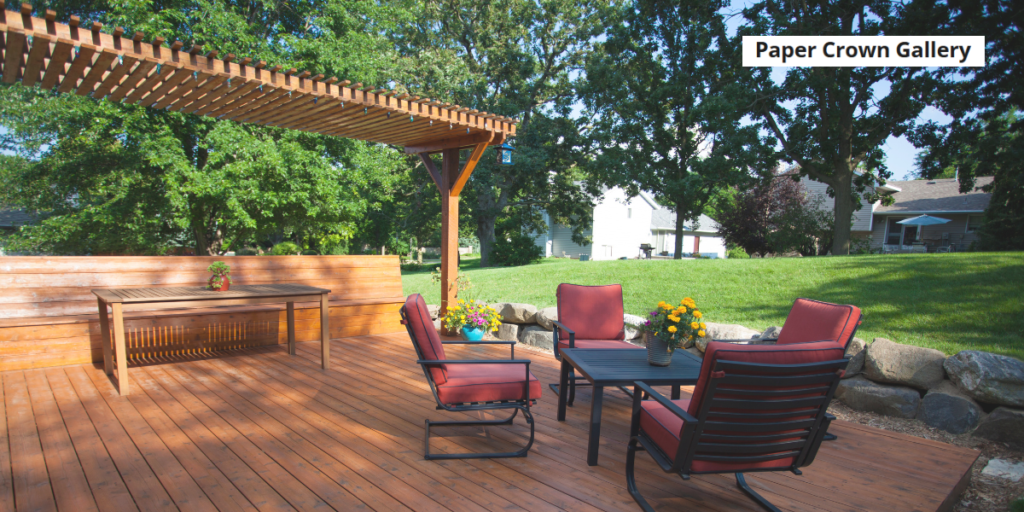
Consider Your Backyard Layout
Firstly, measure your yard dimensions to determine if a large custom pergola or compact design fits better. We’ve seen small patios around 10×10 feet work well with attached pergola structures, while bigger spaces can accommodate freestanding designs up to 20×20 feet or more.
Also, check for underground utilities, tree roots, and drainage patterns before selecting your pergola location (trust us, nobody wants to dig up a water line mid-project). Call 811 to mark utility lines at least three days before any digging starts.
Plus, look at how water flows through your yard during heavy rain to avoid placing your structure in a low spot where puddles form.
Quick tip: Leave enough clearance (at least 3 feet) around the pergola for furniture, walkways, and landscape design elements.
Match Your Home’s Architecture
Modern pergola styles with clean lines complement contemporary homes, while traditional designs with decorative posts suit classic architecture. Besides, a house with sleek metal siding pairs beautifully with an aluminum or steel structure, and homes with brick or stone walls look great with wooden pergola beams.
Don’t forget to choose pergola colors and finishes that coordinate with your home’s exterior trim and siding. Powder coating comes in dozens of shades, so you can match existing deck railings or patio doors exactly. In fact, matching your pergola to these details creates a cohesive look across your entire outdoor living space.
Think About How You’ll Use It
Plan for a dining area if you want outdoor meals with seating for six to eight people. Generally, a standard dining table measures about 6×3 feet, so add at least 4 feet around all sides for chairs and walking space. This brings your minimum pergola size to roughly 14×11 feet for comfortable dining.
You can also add space for an outdoor kitchen with a counter area, grill station, and storage cabinets nearby. Many homeowners even place their cooking zone on one end of the pergola and the dining area on the other to create a natural flow from food prep to serving.
This way, backyard pergolas work perfectly as focal points where multiple seating areas meet, especially when you add string lights overhead for ambiance after the sun goes down.
Pergola Materials: Finding the Best Fit
The best material for your pergola depends on maintenance tolerance, budget, and the look you want.
Now, let’s look at how each option performs in real backyard conditions:
Wood Pergolas for Natural Warmth
Cedar and redwood resist rot naturally and develop a beautiful gray patina over the years of exposure. These woods contain natural oils that repel insects and moisture without chemical treatment.
Pressure-treated pine also offers a budget-friendly option, but requires regular staining every two to three years (that’s the reality of wood maintenance). Once you skip the staining, you’ll see warping and cracking within five years.
Wood pergolas blend perfectly with gardens and create classic backyard pergola charm that homeowners love. On top of that, climbing plants and vines grow beautifully up wood posts and create natural shade over time.
Metal Pergola Options for Modern Homes
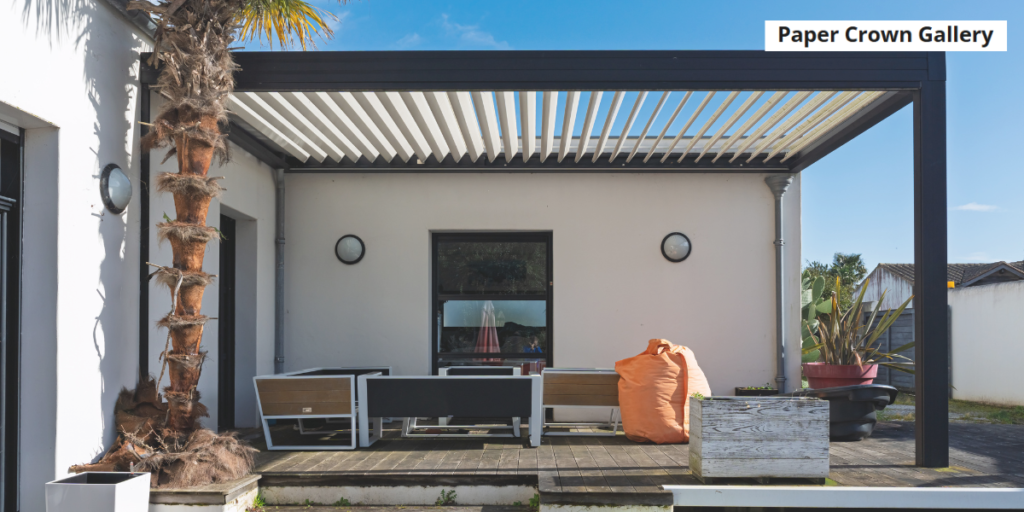
Aluminum pergolas need almost zero maintenance and won’t rust, warp, or need painting over time. This durable metal stays lightweight yet strong enough to support retractable roofs, curtains, and integrated lighting.
On the flip side, steel frames provide the strongest support for hanging plants and lighting systems. They also handle snow loads better during harsh Midwestern winters and create a bold, contemporary look with thicker posts and beams.
For your information, powder-coated finishes come in dozens of colors, including sleek black, crisp white, and bronze tones to match any home exterior and weather conditions.
Mixed Materials for Custom Looks
You can combine metal posts with wood beams to get durability plus natural beauty in one structure. For example, homes in Hinsdale with stone patios often extend that material into pergola posts for a cohesive design.
When stone or brick columns are paired with wooden crossbeams, the combination creates a stunning Mediterranean or Craftsman-style appeal. Here, the stone provides a permanent foundation, while the wood roof keeps the structure feeling open.
Metal frames with fabric canopies also provide flexibility to change colors as tastes evolve.
Once that’s established, you can swap out shade sails seasonally without rebuilding the entire pergola.
Attached vs. Freestanding: What Works Better?
Attached pergolas save money and extend your living space, while freestanding ones give you total placement freedom. From this comparison, the focus shifts to understanding which structure type works best for your backyard layout.
Attached Pergola Benefits
Attached designs extend your home’s living space and connect your indoor and outdoor spaces naturally. These pergola anchors directly to your house wall and create a covered transition between your kitchen and patio.
With such a structure, you can save on construction costs since one side anchors to the existing house structure and foundation (your guests will thank you for the shorter walk).
It also offers easy access from the kitchen or living room, making outdoor dining much more convenient. As a result, you can carry food outside in seconds, and guests flow easily between indoor and outdoor areas during parties.
Freestanding Pergola Flexibility
We recommend placing freestanding pergolas anywhere in your yard near pools, gardens, or scenic views you want, so you can get afternoon shade during summer.
Besides, this design separates outdoor rooms for different activities, like cooking, dining, or relaxing by the fire pit. They often work beautifully as focal points in larger backyards by creating distinct zones for an outdoor kitchen and a seating area.
You can even add or relocate freestanding structures later without affecting your home’s exterior walls or deck. This flexibility counts most if you’re planning future renovations or want to adjust your landscape design as your garden matures.
Adding Features to Your Outdoor Living Space
By adding features to your outdoor living space, you can convert a simple structure into a fully functional outdoor room.
But wait, there’s more to consider beyond the basic pergola design. Here they are:
- String Lights and Paper Lanterns: String lights, paper lanterns, or built-in LED strips provide a beautiful ambiance after sunset. Basically, string lights create a warm glow for evening dining, while integrated lighting systems let you control brightness from inside your house.
- Adjustable Louvers and Shade Sails: Install retractable canopy systems or louvered roofs to adjust shade coverage and protect from unexpected rain. You can adjust the louvers at any time to control incoming light throughout the day and during the afternoon sun. Besides, shade sails offer another option for partial shade without blocking airflow.
- Climbing Plants and Vines: You can add climbing plants, vines, or privacy curtains to bring natural charm and boost your landscape design. Over time, vines grow up wooden posts and provide natural shade within two years. Plus, outdoor curtains create privacy for dining areas and block the wind on breezy days.
- Built-in Fire Pit and Seating: Built-in seating, storage benches, or outdoor kitchen components maximize functionality. Additionally, add a porch swing or place a dining table underneath for family meals.
- Ceiling Fans for Comfort: Ceiling fans keep air moving during hot summer days on the patio. They also help circulation without taking up floor space in your outdoor area.
Pro Tip: Layer multiple features like lighting, shade options, and seating to create an outdoor living space you’ll use year-round, not just during perfect weather.
Ready to Build Your Perfect Backyard Retreat?
Choosing the right pergola lies in measuring your space, selecting materials, and deciding between attached or freestanding based on how you’ll use it. Modern pergola ideas often give you endless options for outdoor living year-round.
Focus on your backyard layout first, then pick materials and features. Generally, wood offers natural warmth while metal provides sleek style. Plus, adding string lights, fire pits, and outdoor kitchens converts your pergola into a gathering spot.
Still struggling with how to design your outdoor space? Seek help from Paper Crown Gallery. We specialize in custom pergola designs for Chicago-area homes.
Contact us to discuss your backyard ideas and create a space you’ll love.